The AI Revolution is Here
Artificial Intelligence isn't coming—it's already reshaping how businesses operate. From chatbots handling customer queries to predictive analytics driving decisions, AI integration has moved from 'nice to have' to 'must have' for competitive businesses.
Beyond the Hype
Let's cut through the buzzwords. Practical AI integration means tangible improvements to your daily operations:
- •Automation — Eliminating repetitive tasks that drain human potential and creativity
- •Intelligence — Turning raw data into actionable insights that drive better decisions
- •Personalisation — Delivering tailored experiences at scale without sacrificing quality
- •Prediction — Anticipating customer needs before they're even expressed
Real-World Applications
Customer Service Evolution
AI-powered chatbots have evolved dramatically from the frustrating experiences of the past. Modern implementations deliver genuine value to both businesses and customers.
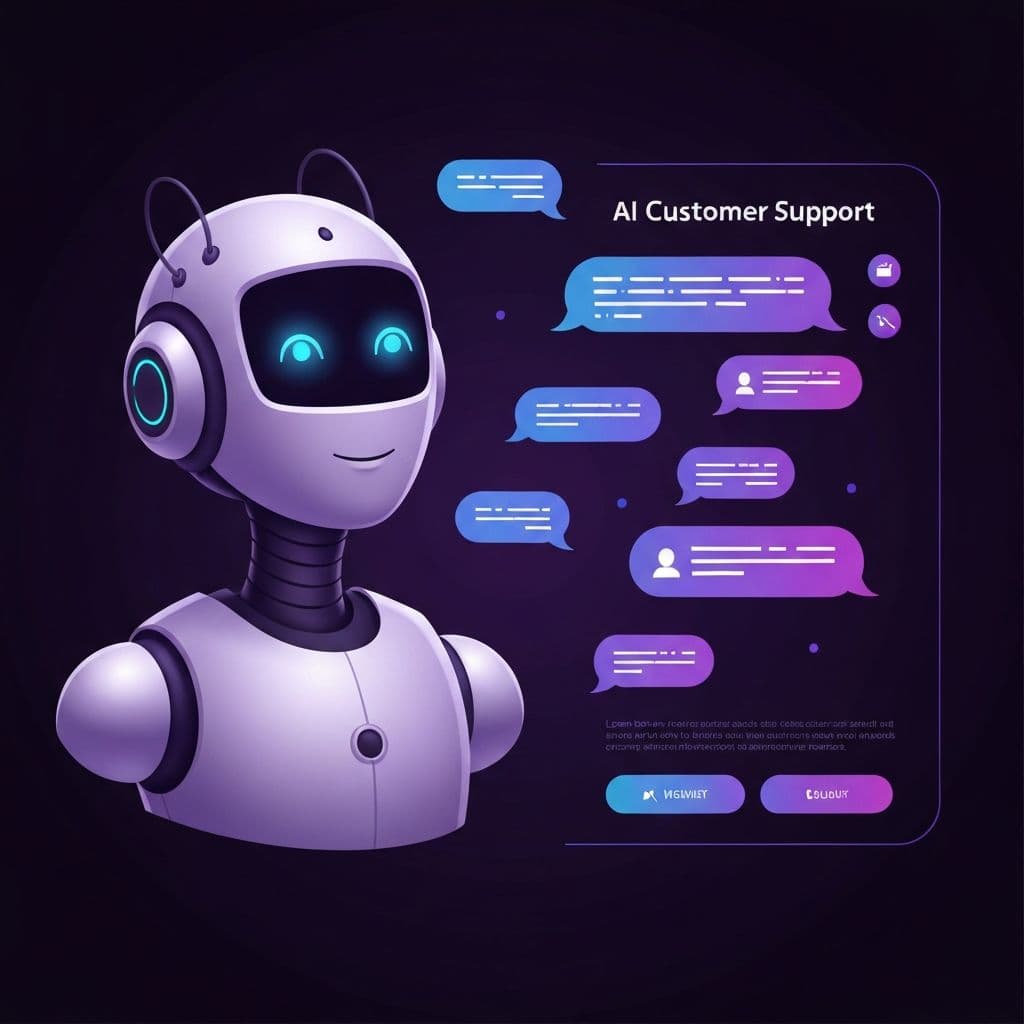
- •Handle 80% of routine enquiries without human intervention
- •Operate 24/7 across multiple time zones and languages
- •Learn from interactions to improve over time automatically
- •Seamlessly escalate complex issues to human agents with full context
The result? Faster response times, happier customers, and significantly reduced support costs—without sacrificing the human touch where it matters most.
Intelligent Content Creation
AI doesn't replace creativity—it amplifies it. Your team can focus on strategy and brand voice while AI handles the heavy lifting.
- •First drafts — AI generates starting points, humans refine and perfect
- •Personalisation — Tailored content for different audience segments at scale
- •Optimisation — A/B testing and iteration at unprecedented speed
- •Translation — Instant localisation for global markets without quality compromise
Predictive Analytics
Stop reacting to problems. Start anticipating opportunities. Predictive AI transforms your approach from defensive to proactive.
- •Customer churn prediction — Identify at-risk customers before they leave
- •Demand forecasting — Optimise inventory and resource allocation
- •Lead scoring — Focus sales efforts where they'll have maximum impact
- •Fraud detection — Catch anomalies before they become costly problems

Process Automation
Every business has workflows begging for automation. These aren't exciting, but they're transformative:
- •Invoice processing and reconciliation with near-zero error rates
- •Report generation and distribution on schedule without manual effort
- •Data entry and validation that would take humans hours
- •Email categorisation and routing to the right team instantly
The Competitive Advantage
Speed to Market
AI accelerates everything. Faster product development cycles, quicker response to market changes, and reduced time from insight to action. In competitive markets, speed wins.
Cost Efficiency
Automation isn't about replacing humans—it's about redirecting human effort to where it creates the most value. Expect to reduce manual processing by 60-80%, lower error rates and rework, and scale operations without proportional headcount increase.
Getting Started with AI Integration
Start Small, Think Big
Don't try to boil the ocean. Identify one high-impact, low-risk area to prove the concept:
- •Customer support chatbot — Quick wins with easily measurable impact
- •Email automation — High volume tasks with clear rules
- •Data analysis — Turn existing data into actionable insights
- •Content assistance — Support creative teams without replacing them
The Integration Roadmap
Successful AI integration follows a proven pattern. Phase 1 (Foundation, 1-3 months): Audit existing processes, identify opportunities, set success metrics. Phase 2 (Implementation, 3-6 months): Deploy pilot solution, train team, gather feedback. Phase 3 (Expansion, 6-12 months): Roll out to additional areas, integrate systems, build internal competency.
Common Concerns Addressed
"AI Will Replace My Team"
The reality: AI handles tasks, humans handle judgment. The most successful implementations augment human capabilities rather than replace them. Your team becomes more valuable, not less—freed to focus on work that requires creativity, empathy, and strategic thinking.
"It's Too Expensive"
Modern AI tools have democratised access. Many solutions offer free tiers for exploration, pay-as-you-go pricing that scales with value, and ROI within months rather than years. The question isn't whether you can afford AI—it's whether you can afford to wait.
Every month you delay, competitors gain ground, inefficiencies compound, and opportunities slip away. The question isn't whether to integrate AI—it's how quickly you can do it effectively.
Your Next Step
AI integration doesn't require a massive overhaul. Start with a conversation about what processes consume the most time, where errors most frequently occur, and what decisions could benefit from better data. The future belongs to businesses that embrace these tools thoughtfully and strategically.